
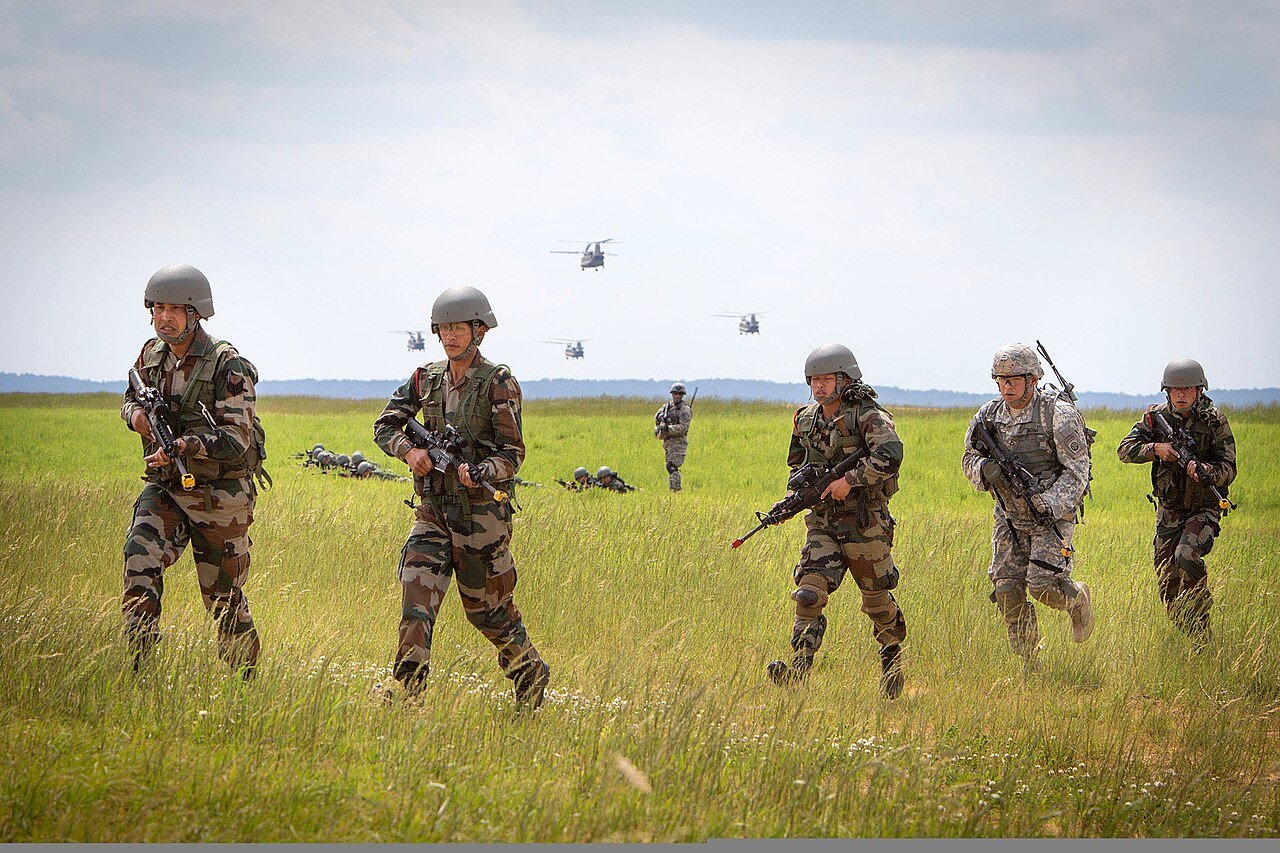
Indian Army soldiers of the 2nd Battalion, 5th Royal Gurkha Rifles during a training exercise in 2013. Image: Sgt. Michael J. MacLeod, US Army, public domain, via Wikimedia Commons.
On Monday, as Delhi announced that Foreign Secretary Vikram Misri would visit Kathmandu, a welfare association of former Indian Army soldiers protested in the Nepali capital with one demand: resume the recruitment of Gurkha soldiers into the Indian Army. Recruitment has been suspended since the Agnipath scheme was introduced in 2022. Here is what the scheme changed and why the pause has lasted.
What Agnipath is
The Union Cabinet cleared Agnipath on June 14, 2022. Under it, recruits called Agniveers are enrolled under the respective Service Acts and serve for four years. They draw a customised monthly package with risk and hardship allowances, starting at Rs 30,000 a month in year one, with 30 percent going into a corpus fund matched by the government. On exit after four years, an Agniveer receives a one-time Seva Nidhi package of Rs 11.71 lakh, including interest. The first year’s target was 46,000 recruits, and the government’s stated aim was a younger, fitter, more tech-savvy profile for the armed forces.
Where Gurkha recruitment stands
Recruitment of Gurkha soldiers from Nepal remains suspended since the scheme was introduced, The Hindu reported on November 2. Around 32,000 Gorkha soldiers from Nepal were already serving in the Indian Army as of the MEA’s last bilateral brief, and India maintains pension offices for ex-Gurkha soldiers in Kathmandu, Dharan and Pokhara. The suspension sits inside a recruitment channel that predates Indian independence by decades.
What the protesters want
The ex-servicemen’s association wants the tap turned back on. Its protest was timed, intentionally or not, alongside the announcement of Mr. Misri’s visit. Neither government has said publicly that Gurkha recruitment is on the agenda for the November 4-5 talks, so for now the demand is a protest, not an agenda item.