
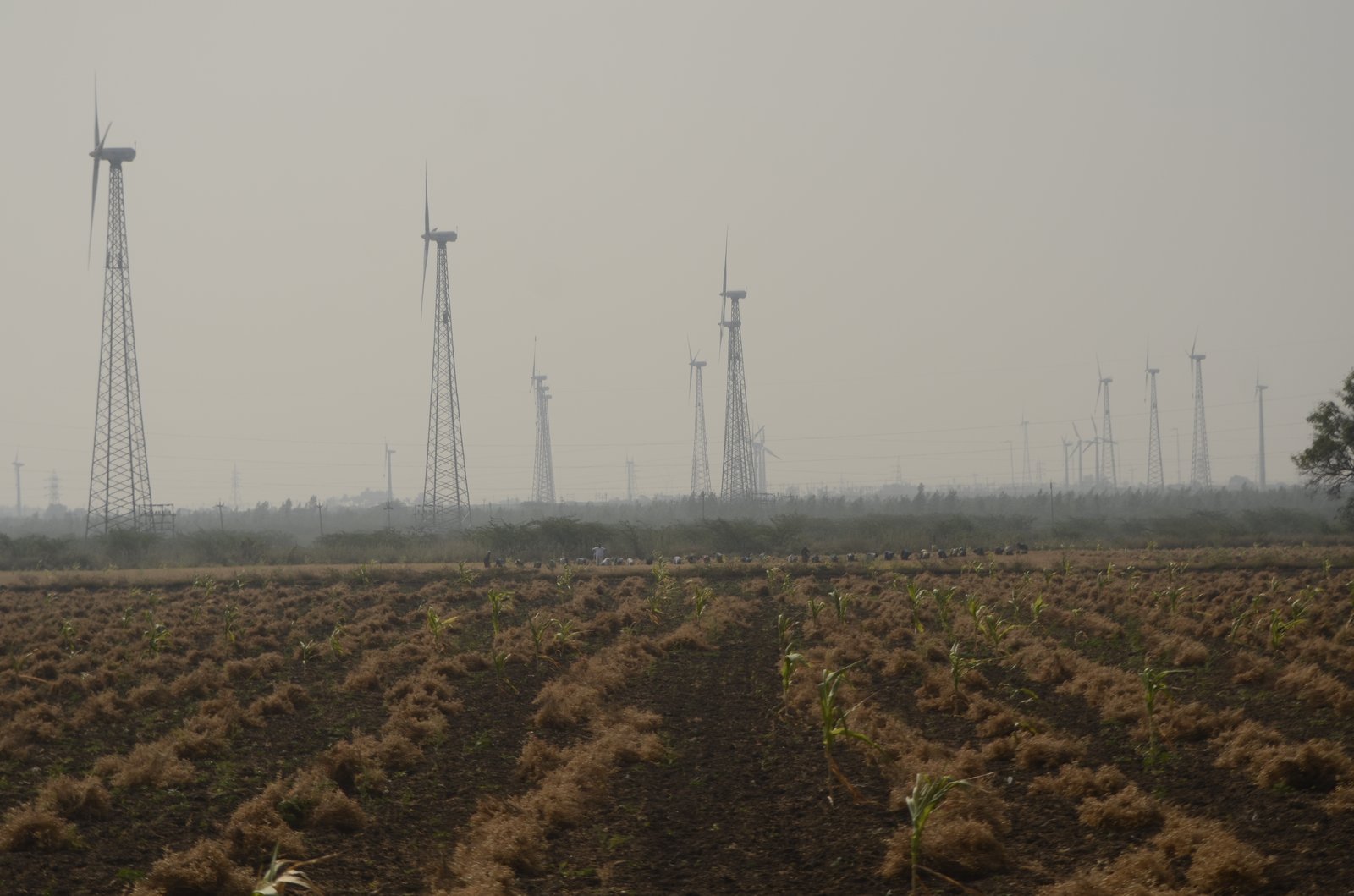
File photo: wind turbines over a chickpea field in Tamil Nadu. PJeganathan. Wind turbines and chickpea field in Tamil Nadu JEG6274.jpg. Wikimedia Commons. Source URL. Published under CC BY-SA 4.0. Cropped and resized.
Prime Minister Narendra Modi said on Monday that India will add 500 gigawatts of new non-fossil fuel power capacity over the next 10 to 11 years, The Indian Express reported. The number is big; what goes into it is worth unpacking.
What “non-fossil” covers
Non-fossil capacity is installed generating capacity that runs without burning coal, oil or gas – solar, wind, hydro and nuclear. Capacity, measured in gigawatts, is the ability to generate, not the electricity actually generated. It is the clean side of India’s installed power base, which the Central Electricity Authority puts at 558.89 GW in total.
The 2030 commitment
At COP-26 in 2021, India resolved to reach 500 GW of non-fossil capacity by 2030. In his speech at the Bharat Renewable Energy Summit, Mr. Modi said nearly 300 GW of that goal is already achieved. The CEA’s current count is 308 GW of installed non-fossil capacity, about 55.1 percent of the total.
A pledge already met
Under the Paris pledge, India had set out to meet half of its installed power capacity from non-fossil sources by 2030. That line was crossed in 2025 itself, five years early – today more than 50 percent of installed capacity is non-fossil. The new 500 GW addition over 10 to 11 years would come on top of the existing base.
The manufacturing behind it
A decade ago, India’s solar module manufacturing capacity was about 2 GW; it has crossed 200 GW now, with solar cell capacity near 40 GW, the Prime Minister said. He put the investment opportunity in the sector at more than Rs 20 lakh crore, around $220 billion, by the end of this decade, against $164 billion invested over the past ten years. India is also working in mission mode to produce 50 lakh tonnes of green hydrogen by the end of the decade under the National Green Hydrogen Mission.
The honest caveat with any capacity target: a gigawatt installed is not a gigawatt always generated, since solar and wind depend on the weather. But the direction of the build-out is the point the government is making.