
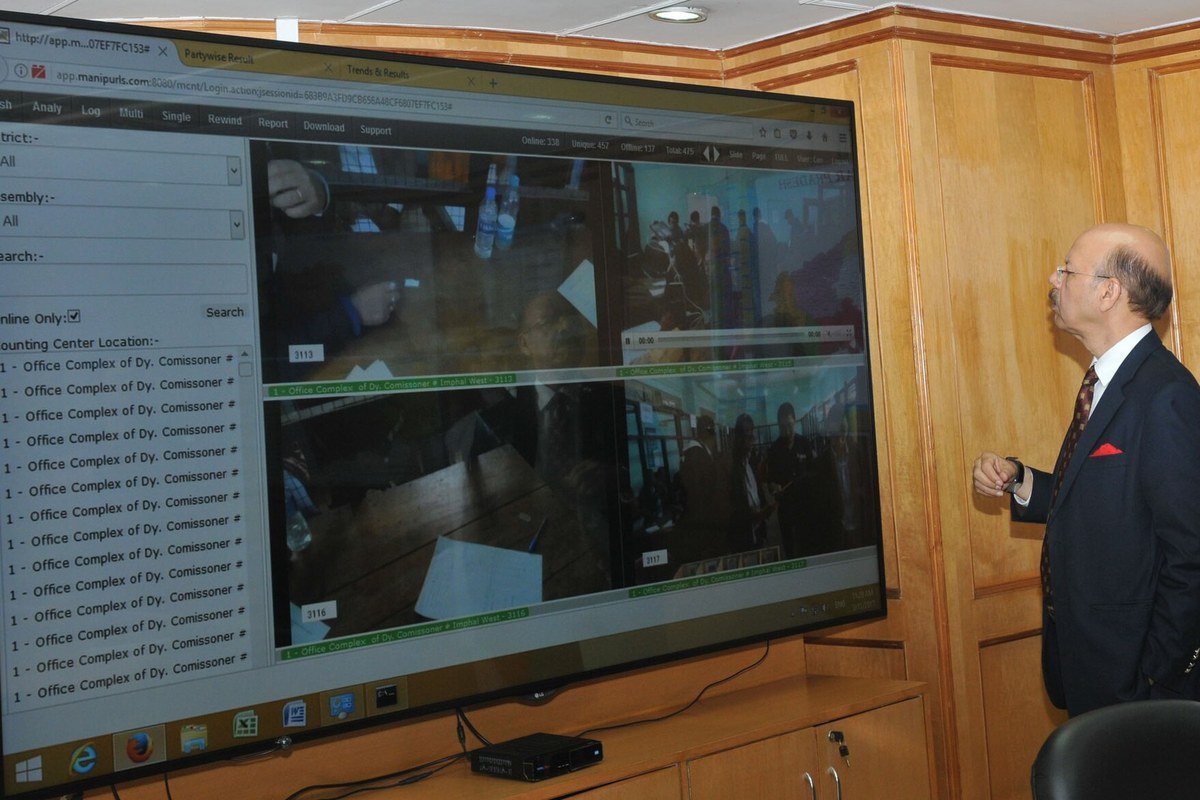
File photo: the Election Commission of India’s Nirvachan Sadan office in New Delhi during counting in March 2017. Election Commission of India (GODL-India). Wikimedia Commons. Source URL. Published under GODL-India. Cropped and resized.
Former Chief Election Commissioner S.Y. Quraishi has renewed two criticisms at once: that the West Bengal elections were not legally valid, and that the Election Commission of India is not deciding matters the way its own rules require, The Hindu reported.
What he alleged
Delivering the keynote at the Hashim Abdul Halim Memorial Lecture in Kolkata on Thursday, Mr. Quraishi said the Bengal election “was not” legally valid in his opinion – a position he said he has stated several times. Areas where there was suspicion of majority Muslim voters being removed must be rechecked and go for re-polls if needed, he said, adding that the matter is now before the Supreme Court.
The majority principle
His procedural charge goes to how the three-member ECI decides. The rules first call for unanimous decisions, he said; if that is not possible, there must be a majority-based decision. “The CEC is not the Election Commission,” he said, and one person’s decision alone cannot be final. He was referring to an Indian Express report that election commissioners Sukhbir Singh Sandhu and Vivek Joshi had raised at least 14 objections to decisions allegedly taken unilaterally by CEC Gyanesh Kumar.
On the SIR
Mr. Quraishi accused the special intensive revision of being used as a process for backdoor citizenship checks, calling it neither smooth nor transparent. The voter, he said, is not supposed to beg for voting rights – tradition once ensured voter cards were delivered to homes. The questions raised, he noted, are being heard in the Supreme Court.
The government’s reply
Minister Dilip Ghosh responded on Friday that the government has been in power for six to seven months and people are happy, suggesting some are raising questions because they did not get the outcome they desired. Accepting the people’s verdict is the right decision, he said, warning that those opposing it have a “tough” road ahead.