
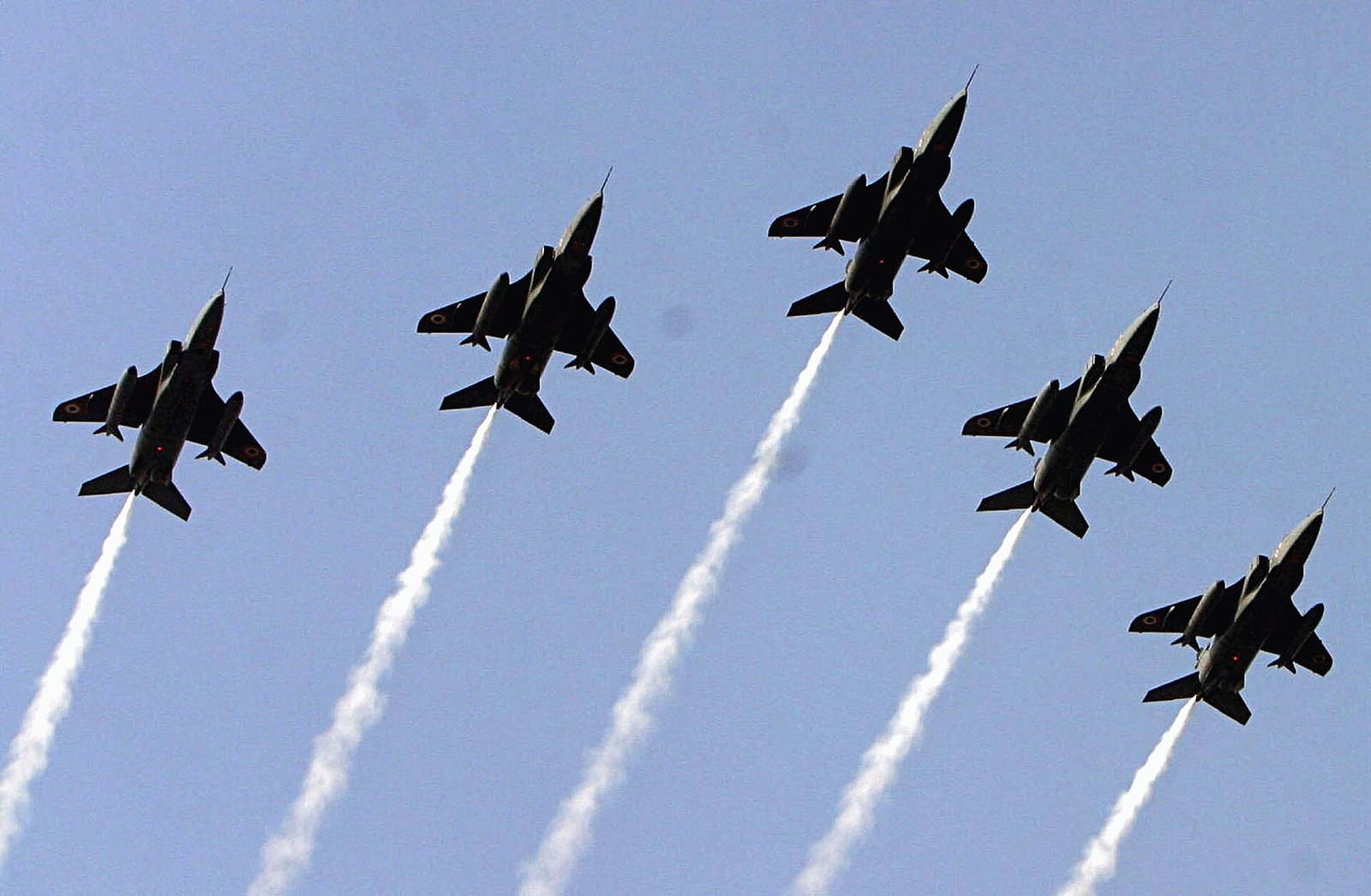
File photo: Indian Air Force Jaguar aircraft at the Republic Day parade in New Delhi. Antônio Milena/ABr. India.Military.03.jpg. Wikimedia Commons. Source URL. Published under CC BY 3.0 BR. Cropped and resized.
The Union Cabinet on Wednesday changed the arithmetic of the Agnipath scheme. Every Agniveer now has a route to becoming a regular soldier – not just the top 25 per cent, as a Press Information Bureau release and The Indian Express reported.
What the scheme was
Under Agnipath, announced in 2022, recruits called Agniveers serve a four-year tenure in the Army, Navy or Air Force. At the end, only 25 per cent of each batch were to be retained as regular soldiers; the rest would exit with a Seva Nidhi package – a lump sum built from equal contributions by the Agniveer and the government.
What the Cabinet added
The 25 per cent merit-based absorption stays. The change is for the other 75 per cent: instead of exiting after four years, they will be offered a further two-year engagement. After those two years, all of them will be enrolled as regular soldiers – subject, the Cabinet says, to their willingness and to meeting the military’s objective selection criteria. In effect, four years of service now becomes six for those who choose it, with a second selection gate at the end.
The money during the bridge
The extension comes with higher pay: Rs 43,500 in the first extra year and Rs 47,500 in the second, Chief of Defence Staff General N S Raja Subramani said – against the Rs 30,000 monthly starting pay the first batch drew. The Seva Nidhi package also improves for those who still choose to leave: the government will now contribute 70 per cent of the corpus, instead of matching the Agniveer’s half. Seniority benefits apply too.
Who this touches first
The timing matters because the scheme’s first batches are reaching the end of their tenures. The first Navy batch completes four years this month, and the first Army and Air Force batches at the end of next month. Over three lakh Agniveers are in training across the three services, about 2.8 lakh of them in the Army.
What has not changed
General Subramani was explicit that Agnipath has not been discontinued: the initial four-year tenure and the 25 per cent first gate remain. He also said the change removes the need for reservation for Agniveers in paramilitary forces, since the new pathway offers them a full career in the Armed Forces itself. Whether an individual Agniveer makes it through either gate still depends on the services’ selection criteria – the pathway is an opportunity, not a guarantee.